
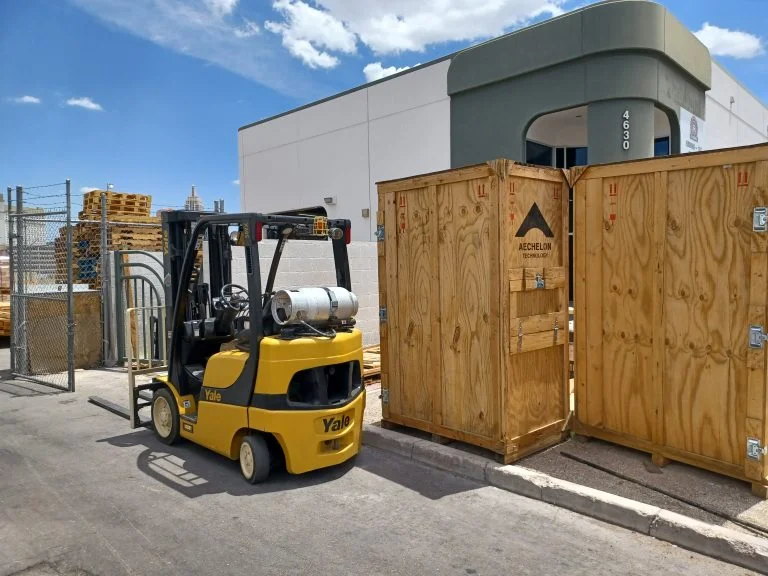
Pallet vs. Crate Shipping: Key Comparison
In logistics and freight shipping, pallets and crates serve different purposes. Pallets provide a base platform for stacking and moving goods (often with boxes or items secured on top), while crates are fully enclosed wooden or sometimes plastic/metal boxes that surround and protect the load on all sides. Pallets are the industry standard for efficient, high-volume shipping; crates excel when maximum protection is needed.
Here's a concise side-by-side comparison:
| Aspect | Pallets (e.g., Wooden Standard 48″x40″) | Crates (Wooden or Custom Enclosed) |
|---|---|---|
| Design | Open platform with top/bottom decks; items stacked on top and often shrink-wrapped | Fully enclosed box with walls, lid, and base; load secured inside |
| Protection Level | Moderate – exposed sides; relies on wrapping/boxes for security | Superior – full enclosure shields from impact, moisture, dust, theft |
| Best For | Uniform, stackable, non-fragile goods (boxed products, bulk items, retail distribution) | Fragile, high-value, oversized, irregular, or sensitive items (machinery, electronics, art, medical devices) |
| Cost | Lower upfront and shipping (less material, lighter) | Higher (more material, labor; often custom-built; heavier → higher freight) |
| Weight & Shipping Fees | Lighter overall; better for dimensional/weight-based rates | Heavier and bulkier; increases costs, especially international |
| Handling Efficiency | Excellent – forklift/jack compatible from all sides; fast loading/unloading; racking-friendly | Slower; often requires more handling; less compatible with automation |
| Stackability | High when properly secured; stable in warehouses/trucks | Good if designed for it, but enclosed design limits visibility/stability in some cases |
| Reusability | Often reusable/recyclable; returnable pools common | Reusable in some cases, but custom crates frequently one-way |
| Environmental Impact | Generally sustainable (wood recyclable); less material | More material used; higher footprint unless reused heavily |
| Typical Use Cases | Warehouse storage, LTL/FTL trucking, domestic distribution, palletized containers | International/export, heavy machinery, valuables, long-haul where damage risk is high |
Bottom line
Choose wood pallets for speed, cost savings, and efficiency in most standard logistics scenarios (especially warehouses, e-commerce fulfillment, or domestic freight). Opt for crates when product protection outweighs cost and handling speed—such as for valuable, delicate, or export shipments. Many operations combine both (e.g., crated items palletized for easier transport). The right choice depends on your cargo type, value, fragility, and shipping distance.
Here's a more concise side-by-side comparison of crates (reusable plastic or wooden) vs. cardboard boxes for shipping and storage:
| Aspect | Crates (Reusable Plastic / Wooden) | Cardboard Boxes |
|---|---|---|
| Durability | High – resists crushing, moisture, pests, repeated use | Medium-low – weakens when wet or overloaded |
| Product Protection | Excellent for heavy, fragile, or valuable items | Adequate for light, non-fragile goods |
| Stackability | Superior – rigid, interlocking, stable high stacks | Limited – risks collapse under weight |
| Reusability | 100s of cycles (especially rental/pooling systems) | Single-use or very limited reuse |
| Upfront Cost | Higher (purchase or rental fee) | Very low or free |
| Long-Term Cost | Lower – savings on damage, waste, repurchasing | Higher – constant replacement + disposal |
| Environmental Impact | Better over many cycles (less waste) | Recyclable but high single-use volume |
| Handling Efficiency | Faster – no assembly, forklift-ready, nestable when empty | Requires folding, taping, slower packing |
| Best For | Supply chains, repeated shipments, long-term storage, heavy/valuable goods | One-off, lightweight, low-budget moves |
Bottom line:
Crates win for reliability, efficiency, and total cost in professional or repeated-use scenarios (warehouses, logistics, moving businesses). Boxes remain convenient for occasional, light-duty needs.
Pallets vs. Skids: Key Comparison in Shipping & Logistics
In warehousing, shipping, and material handling, pallets and skids are often confused or used interchangeably, but they differ mainly in design. Pallets are the modern standard for most logistics, while skids (the original “pallet” design) suit specific niche uses. The core difference: pallets have both a top and bottom deck (full flat surfaces top and bottom), while skids have only a top deck resting on runners/stringers (no bottom deck).
Here's a concise side-by-side comparison:
| Aspect | Pallets (Standard, e.g., 48″x40″ wooden) | Skids (Single-Deck Platforms) |
|---|---|---|
| Design | Top deck + bottom deck + stringers/blocks | Top deck only + runners/stringers (no bottom deck) |
| Stability & Strength | High – even weight distribution, excellent for stacking | Moderate – good for heavy bases but less even distribution |
| Forklift Access | 4-way entry (most designs); easy from all sides | Often 2-way entry; limited access |
| Mobility | Optimized for forklifts, pallet jacks, racking systems | Easier to drag/slide (less friction); harder for stacking |
| Cost | Higher (more materials) | Lower/cheaper (simpler construction, less wood) |
| Weight Capacity | Higher (typically 2,000–5,000+ lbs dynamic) | Adequate for heavy loads but less versatile |
| Stackability | Superior – stable in high racks/warehouses | Limited – not ideal for multi-level stacking |
| Reusability | High – durable, returnable pools common | Moderate – often one-way or stationary |
| Best For | Shipping, transport, warehousing, distribution, repeated handling | Stationary storage, heavy machinery bases, dragging heavy items, one-time/low-mobility uses |
| Typical Use Cases | Retail/e-commerce fulfillment, LTL/FTL freight, palletized loads | Industrial equipment foundations, temporary heavy storage, older facilities |
Bottom line
Choose pallets for efficient, modern logistics—shipping, stacking in warehouses, and high-volume handling (the industry default for good reason). Go with skids when you need a simpler, cheaper, drag-friendly base for stationary or heavy/industrial applications where full forklift versatility isn't required. Many operations use pallets for transport and skids for in-house heavy-duty support.