.webp)
Corrugated Fiberboard Packaging
The material behind nearly every safe shipment — what it's made of, how it's built, and why it works.
What Is Corrugated Fiberboard?
In the world of packaging and shipping, few materials are as ubiquitous and versatile as corrugated fiberboard. Often called simply “corrugated cardboard,” this humble yet ingenious material powers much of global commerce, protecting everything from delicate electronics to priceless artworks during transit and storage. Whether you're a business owner optimizing your supply chain, a consumer unpacking an online order, or just curious about the boxes that surround us, here's a closer look at what corrugated fiberboard is, how it's made, its various sizes and uses, and why it's a staple for packaging and shipping companies worldwide.
The Structure Behind the Box
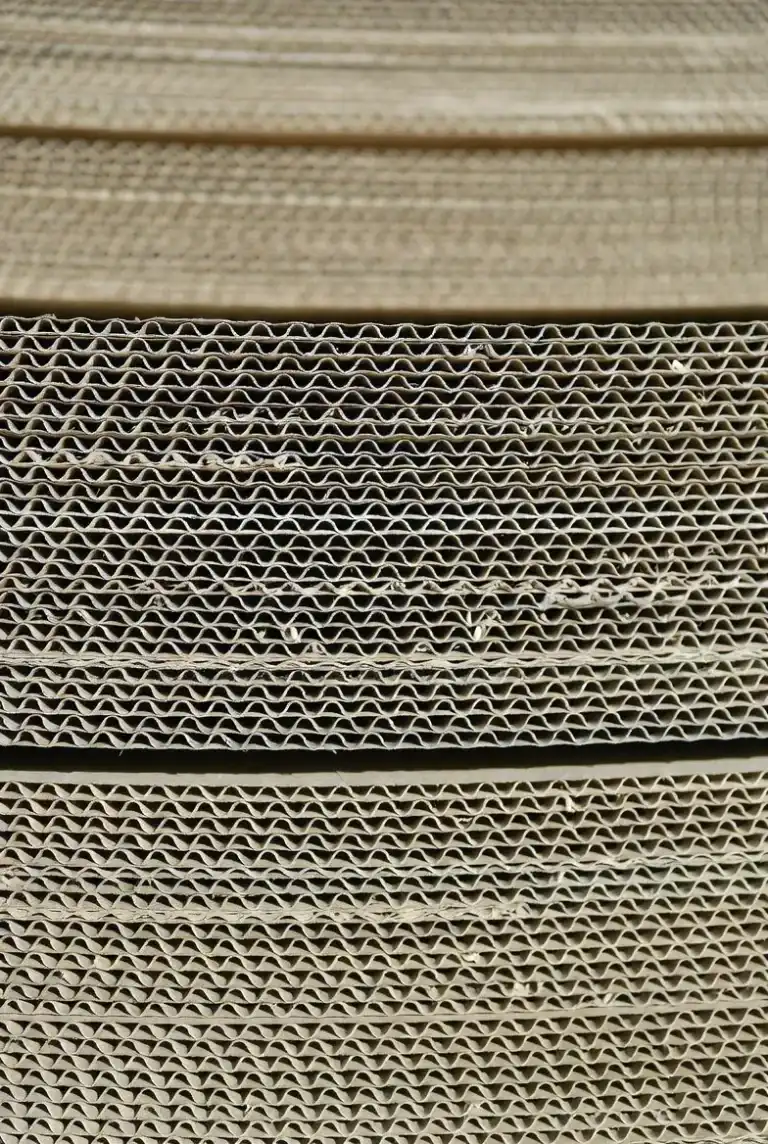
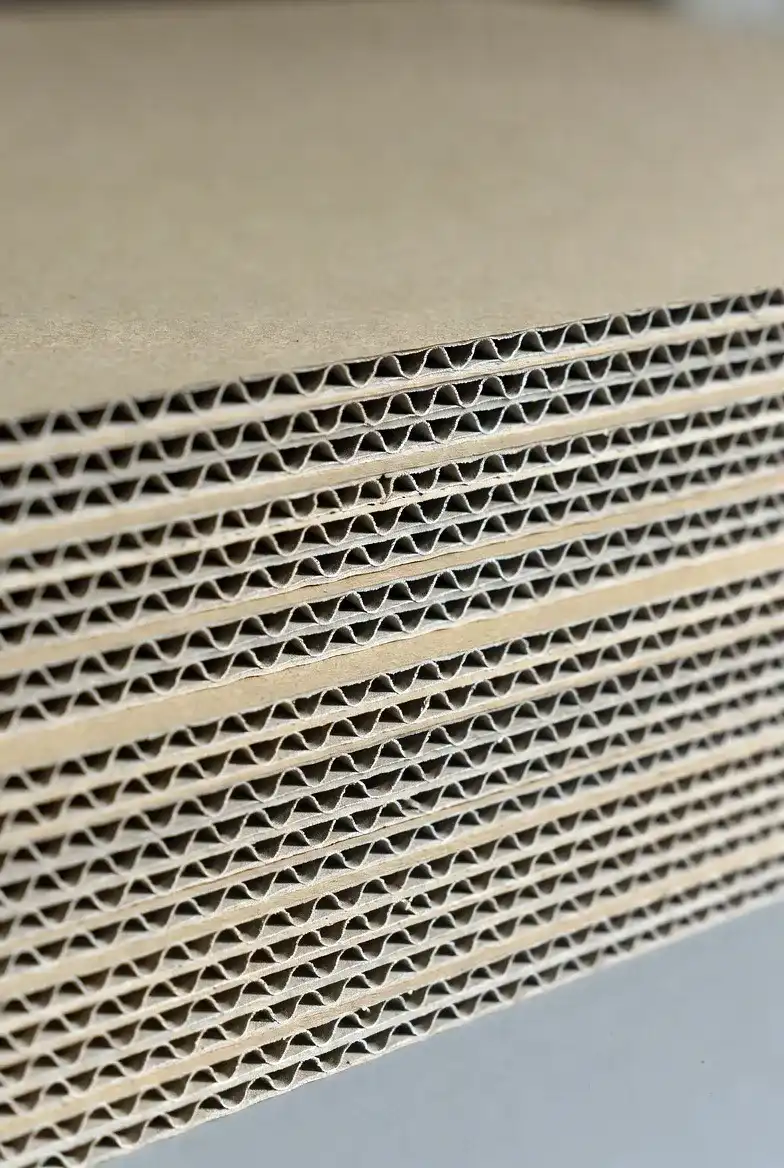
Corrugated fiberboard is a type of paper-based packaging material consisting of a fluted (wavy) corrugated sheet, known as the “medium,” sandwiched between one or two flat sheets called “linerboards.” This structure creates a lightweight yet strong composite that provides excellent cushioning, rigidity, and protection against impacts, compression, and environmental factors.
Unlike plain cardboard — a thinner, single-layer paperboard used for things like cereal boxes or playing cards — corrugated fiberboard's signature wavy layer adds structural integrity, making it ideal for boxes and containers that need to withstand the rigors of shipping.
Invented in the 19th century — with the first patent for corrugated paper in 1856 and full corrugated board in 1871 — it revolutionized packaging by enabling safer transport of goods like glassware and produce without breakage. Today, an estimated 95% of all products shipped domestically in North America use corrugated boxes. Its recyclability, cost-effectiveness, and customizability make it a go-to choice for sustainable packaging solutions.
Materials
Corrugated fiberboard is primarily made from kraft containerboard, a durable paperboard derived from wood pulp. The linerboards are flat sheets, often virgin or recycled kraft paper, providing a smooth surface for printing and structural support. The medium, or fluting, is also paper-based but formed into arches or waves for added strength.
- Linerboard
- Typically over 0.25 mm thick, made from long-fiber pulp for tear resistance.
- Medium (fluting)
- Shorter-fiber paper that's corrugated to create air pockets, enhancing cushioning and insulation.
- Adhesives
- Starch-based glues bond the layers, keeping the material eco-friendly and recyclable.
Many modern variants incorporate recycled content — old corrugated containers (OCC) are a prime source for new fiberboard, supporting a circular economy.
Construction and Dimensions
The construction process happens on specialized machines called corrugators. Paper rolls are fed through, where the medium is heated, moistened, and pressed into flutes before being glued to the linerboards.
- ✓Single-Face — one linerboard + medium (used for wrapping or inner padding)
- ✓Single-Wall — two linerboards + one medium (standard for most shipping boxes)
- ✓Double-Wall — three linerboards + two mediums (for heavier items)
- ✓Triple-Wall — four linerboards + three mediums (for industrial strength)
Flute size and shape also affect the board's properties:
| Flute Type | Height (approx.) | Flutes per Foot | Key Characteristics | Best For |
|---|---|---|---|---|
| A | 4.8 mm | 33–36 | High cushioning, compression strength | Stacking, fragile items |
| B | 2.4 mm | 47–50 | Good puncture resistance, flat surface | Die-cutting, printing |
| C | 3.6 mm | 39–42 | Balanced strength and cushioning | General shipping |
| E | 1.6 mm | 90–95 | Thin, excellent printability | Retail displays, small boxes |
| F | 0.8 mm | 125–130 | Micro-flute, high graphics quality | Luxury packaging, electronics |
This layered design provides durability while minimizing weight, reducing shipping costs — especially useful when exact dimensions matter for third-party logistics.
Sizes and Types
Corrugated fiberboard comes in standard sheet sizes, but boxes are custom-cut to fit specific needs — from small (e.g. 4x4x4 inches for e-commerce) to large (e.g. 48x40x36 inches for bulk shipping). Strength is measured by metrics like Edge Crush Test (ECT) or Burst Strength (Mullen Test), with ratings from 23 ECT (light-duty) to 55 ECT (heavy-duty).
Types include regular slotted containers (RSC) for standard shipping, telescoping boxes for adjustable height, and die-cut designs for unique shapes. Customizations like coatings (water-resistant wax) or reinforcements (for international use) enhance performance.
Usage in Packaging and Shipping
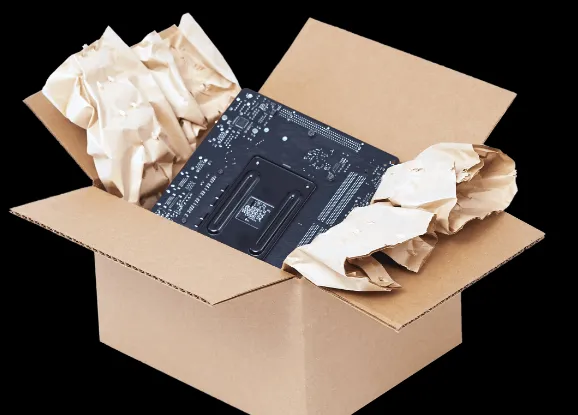
Corrugated fiberboard is the backbone of modern logistics — used for boxes, trays, dividers, and displays. Its air columns act as shock absorbers, protecting contents from drops, vibrations, and stacking pressure. Packaging engineers design boxes to optimize space, weight, and protection, often incorporating inserts like foam or paper padding.
Major carriers rely on it for parcel delivery since it's lightweight (lowering fuel costs) and stackable (maximizing truck/plane space). In warehouses, automated systems fold, fill, and seal corrugated boxes efficiently; for bulk shipments, pallets of boxed goods are wrapped in stretch film for stability during transit.
How Packaging and Shipping Companies Ship With It
Packaging firms customize corrugated solutions using CAD software for precise fits, reducing waste and costs. Shipping networks integrate it at scale: boxes are tested for drop and vibration resistance, labeled with barcodes for tracking, and optimized for dimensional-weight pricing. The e-commerce boom has driven “right-sizing” of boxes to minimize void fill and emissions, and sustainability is driving innovations like reusable corrugated designs.
Benefits and Sustainability
Beyond utility, corrugated fiberboard is eco-friendly: roughly 90% recyclable, biodegradable, and sourced from renewable forests. It reduces shipping emissions through lightweight design and supports branding with high-quality printing.
Fiberboard isn't just a box — it's an engineered material that keeps commerce moving. From safeguarding electronics to enabling global art trade, its adaptability ensures safe, efficient delivery, and sustainability demands keep driving new innovations in this timeless material.
.webp)
.webp)
.webp)
.webp)